Posts

Shrilk: When Shrimps and Silk Make Plastic
Image
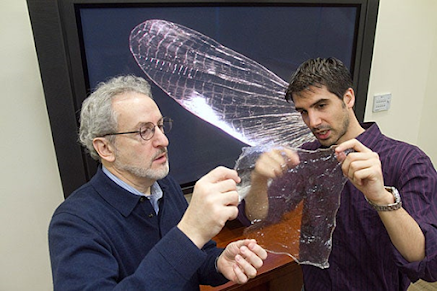
Shrilk: When Shrimps and Silk Make Plastic   Did you know that shrimp exoskeletons are stronger than steel? Shrimp shells can also be used to make strong, biodegradable plastic – which is exactly what scientists at the University of Central Florida have been doing for the past few years. The team has found a way to turn these small crustacean shells into a useful material, one that can be used to create various products. Because this new type of plastic is made from natural materials, it’s not only sustainable but also eco-friendly. Keep reading to learn more about this interesting research! Why Shrimp Shells? First, let’s find out why shrimp shells are such an attractive material for plastic making. Shrimp are abundant and renewable: We can harvest shrimp and then recycle their shells as many times as we want. Shrimp shells are naturally porous: This makes them an excellent material for biodegradable plastic, which needs to be able to break down in the environment. Shrimp shel...
SEMICONDUCTOR CHIP MANUFACTURING

Image
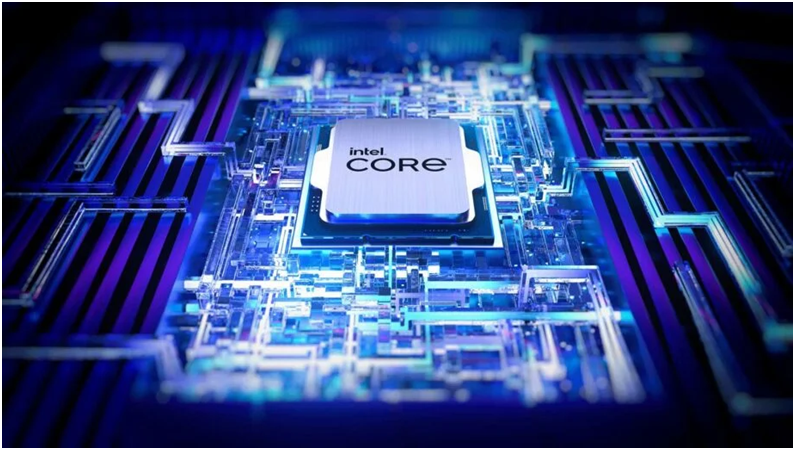
  INTRODUCTION   Have you ever marveled over how far we have come from using flintstones? The human race's achievements in all technological fields over the last century are far beyond expectations. The majority of this success is owed to semiconductors. Semiconductors, used in ICs, microprocessors, in every electronic device have led to feats in communications, computing, healthcare, military systems, automobiles, space missions, artificial intelligence, and every other essential industry.     Are these materials easy to obtain? How are they actually produced? Let’s have a look.   THE PROCESS Making semiconductor devices involve several complicated steps.   1.       MINING The raw material for most silicon, the most commonly used semiconductor, production is the mineral quartzite. Raw quartzite is mostly silicon dioxide (SiO2), and the refining process begins with a reduction reaction to getting rid of the o...

Is Earth's core rusting?

Image
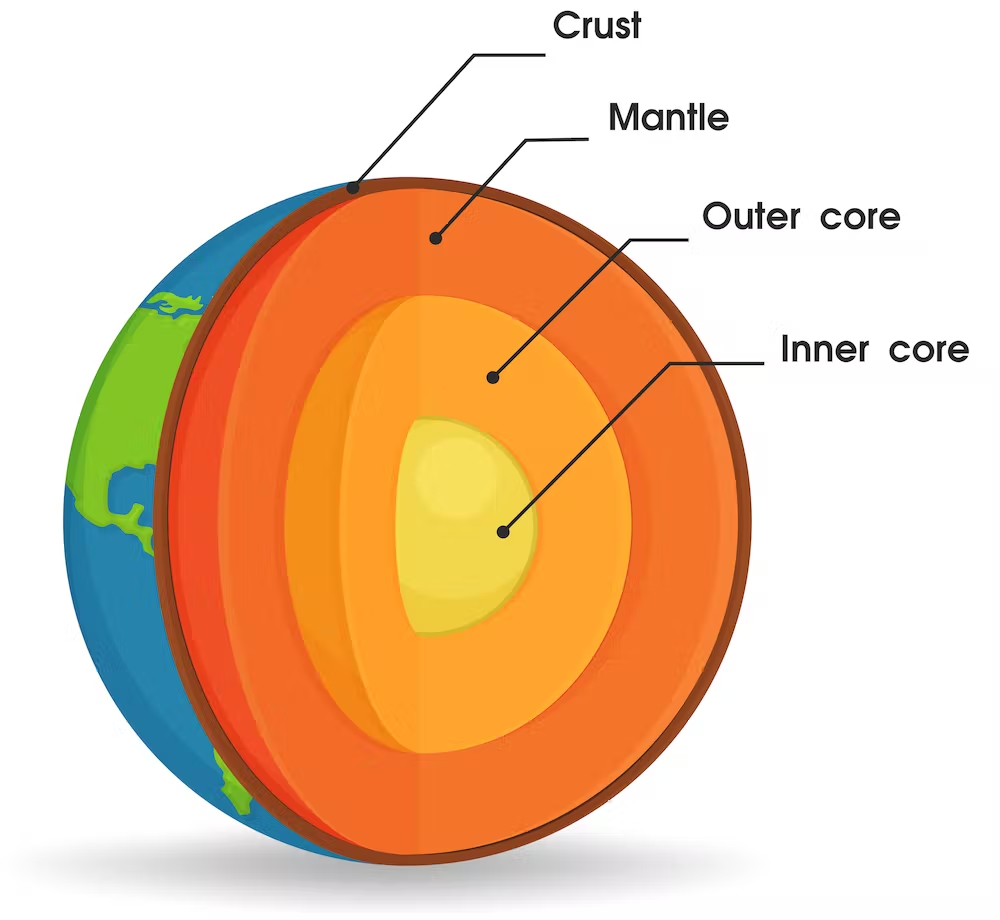
  Deep below Earth’s surface 2,900 kilometers deep, to be precise is a mass of mostly molten iron forming the planet’s outer core. Could it rust as well? Iron on Earth’s surface—whether in simple nails or mighty girders—reacts gradually when exposed to moist air or oxygenated water through a chemical reaction known as oxidation. The reddish-brown product of this reaction is rust. A new study claims that the earth's core is rusting. rusting happens when the iron is exposed to moist air and oxygenated water leading to a chemical reaction leaving a reddish residue behind and making the iron weak. Since the core is situated 2900kms below the earth's surface it was assumed that the high pressure environment and lack of water-bearing minerals have protected the iron in the core from rusting. But recent experiments suggested that rust can form at high pressures and could possibly be formed at locations where water from the earth's crust has sunk to the core-mantle boundry. In the ...

BEST SEMICONDUCTOR MATERIAL EVER FOUND?

Image
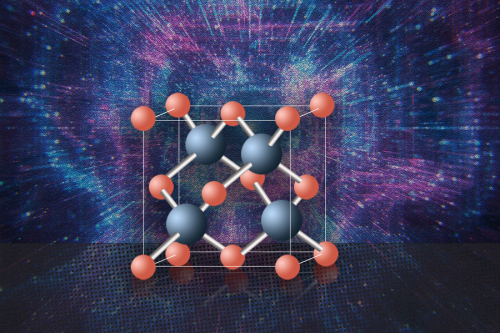
Talking about semiconductors the first and most widely used semiconductor that comes to our mind is silicon, but is silicon the best semiconductor? A team of researchers has discovered what the Massachusetts Institute of Technology calls the “best semiconductor material ever found,” even better than silicon, the material used in just about every computer chip on earth Let's know a little about semiconductors. A semiconductor is a solid substance that has a conductivity between that of an insulator and that of most metals, either due to the addition of an impurity or because of temperature effects. Silicon is one of the most abundant elements on Earth, and in its pure form, the material has become the foundation of much of modern technology, from solar cells to computer chips. But silicon’s properties as a semiconductor are far from ideal. For a thought, is there any other Semiconductor that is better than Silicon? Well, a recent study done by an MIT professor has proved that cubic ...

Material Informatics

Image
Welcome to today's Meta Monday Blog. As you have seen in the title, we will be talking about Material Informatics. At the first glance one may wonder what these terms mean together. Because we seem to know the meaning of both the terms individually. Material is nothing but the matter that is around us, and informatics is the handling and systematic study of information.  Like any other field combined with the field of information, Material informatics attempts to extensively use computational principles to minimise the time required to design a new material, to manage data related to materials with similar properties  Even though the topic deals with materials and the various aspects of data related to it and its synthesis, it does not keep itself limited to that and explores the domains of combinatorial chemistry, Process Modelling, materials property databases, materials data management and product life cycle management. The benefits of combining material sciences with data ...

Seaweed: The future of sustainable future

Image
  SEAWEED : The Future of Sustainable Packaging You must have heard about edible water pouches! These transparent water pouches can be directly eaten with its packaging material. The  packaging material is completely edible.   Lets take a look at speciality of these seaweed based packaging.   From what is this packaging made? This packaging is made from polysaccharides of marine macro algae called seaweed. Seaweed are heterogeneous plants that live in either marine or brackish water environments. It is one of several groups of multicellular  algae :  red ,  green  and  brown . Brown Seaweed 14,073 Brown Seaweed Stock Photos and Images - 123RF         How is the packaging developed? Seaweeds are used globally to make biodegradable and edible packaging materials. Polysaccharides such as agar, carrageenan and alginate are extracted from seaweeds. These have excellent film forming properties....

Programmable Materials

Image
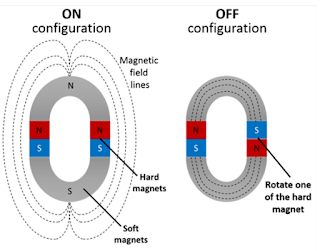
   Hello and welcome to Meta Monday Today we’ll see ·           What are they ·           A brief History ·           The idea What are they Yes, it is just like it sounds, materials that can be programmed to behave in a specific way (i.e., it has the ability to change its physical properties like shape, density, conductivity etc.) under certain conditions like temperature, pressure, etc. A brief History Toffoli and Margolus coined the term ‘programmable matter’ originally in 1991 to refer to a group of very small computing elements arranged in a particular way. Then as semiconductors, nanotechnology advanced, it gave way to a broader class of materials, to include not only those which can be arranged spatially but can also change their properties in a predetermined way. Then in 2002, the Claytronics project was started at the Carnegie Mellon U...